
Why music producers need a blog depends on the career or business goal it supports. A focused blog can help people discover your work, understand your expertise, join your email list, and take the next step toward hiring you or buying from you.
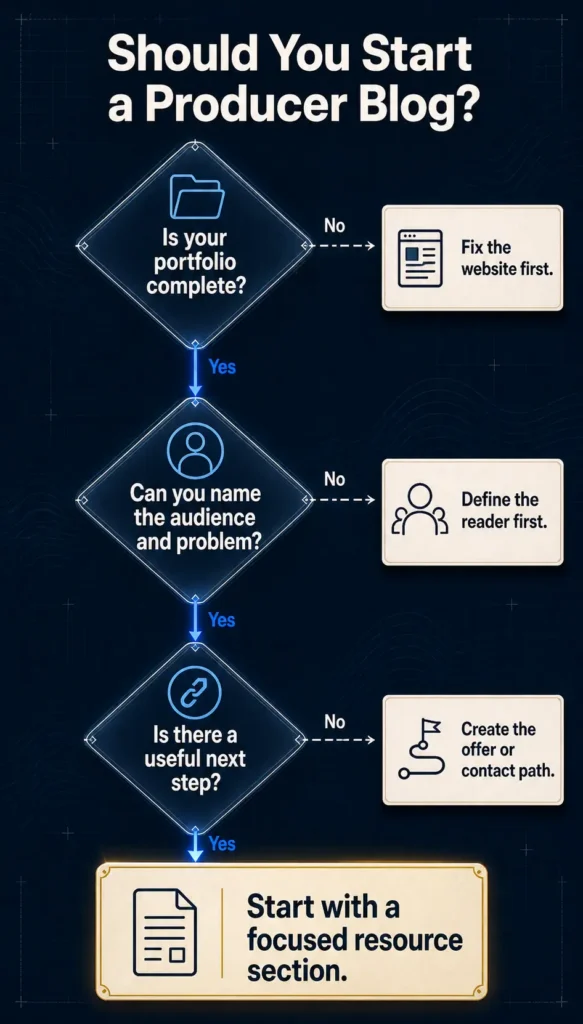
That does not mean every producer should start publishing articles. If your portfolio is incomplete, your contact details are hard to find, or you cannot name the audience you want to reach, fix those problems first.
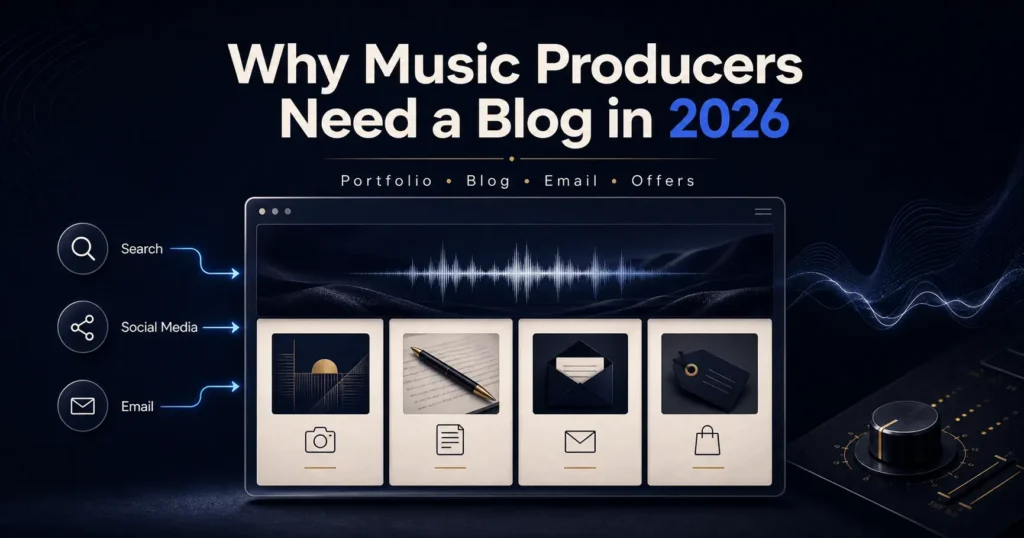
Blog, Website, or Social Media: What Does a Producer Actually Need?
A blog is usually one section of a website, not a replacement for the website itself. TechPrevue’s guide to what a blog is explains the broader distinction.
Each channel has a different job:
| Channel | Best use | Main limitation |
|---|---|---|
| Website | Portfolio, credits, services, products, and contact information | People still need a reason to visit |
| Blog | Searchable explanations, project stories, and useful resources | Requires sustained effort and updates |
| Social media | Discovery, conversation, and distribution | Reach and presentation depend on the platform |
| Direct communication with people who chose to subscribe | Requires permission, list care, and useful messages |
Most professional producers benefit from a simple website and one or two active distribution channels. Add a blog when written or multimedia resources can answer audience questions better than portfolio pages alone.
5 Reasons Why Music Producers Need a Blog
1. Attract People Searching for Production Help
Social posts usually have a short promotional life. A useful article can remain available whenever an artist, filmmaker, podcaster, or another potential client searches for that problem.
For example, a producer might explain what clients should prepare before a mixing session, how remote production works, or how to choose between a custom beat and a nonexclusive license. Those topics can introduce the producer to people who have a real need, rather than people scrolling without buying intent.
Search optimization improves discovery, but it does not guarantee a first-place ranking. Google’s SEO Starter Guide says there are no secrets that automatically rank a site first, while TechPrevue’s SEO guide covers the underlying process in more detail.
2. Turn Your Process into Proof of Expertise
A list of software and equipment tells visitors what you use. A thoughtful breakdown shows how you make decisions.
You could explain how you created space for a vocal, organized a remote collaboration, revised an arrangement after client feedback, or translated a reference track into an original production direction. Share only material you own or have permission to discuss, and never expose private client files or unreleased work.
This evidence is more persuasive than calling yourself experienced. It lets potential clients judge your thinking, communication, and fit before they contact you.
3. Build a Permission-Based Audience You Can Contact Directly
A blog can turn occasional visitors into subscribers. Offer something genuinely useful, such as a production checklist, a small sample pack, session-preparation notes, or release updates, and state clearly what the person will receive after signing up.
Do not describe this exchange as trading user data for a download. An email address is personal information, and a download request should not hide consent to unrelated promotional messages.
Use a clear privacy notice, collect only the information you need, and make unsubscribing easy. Requirements vary by location: commercial email in the United States is subject to the CAN-SPAM Act, while processing digital personal data in India may fall under the Digital Personal Data Protection framework.
Email tools can support either single or confirmed signup flows. Mailchimp’s guide to single and double opt-in explains how the two methods work, but producers remain responsible for choosing a process that fits their audience and applicable rules.
4. Create Clear Paths to Hire, License, or Buy from You
Traffic is not useful by itself. Each article should help the right reader take one sensible next step.
An article for recording artists might lead to a production inquiry form. A beat breakdown might lead to licensing options, while a sound-design tutorial might introduce a related preset or sample pack.
Keep that path relevant and restrained. A reader looking for vocal-recording advice should not have to pass several pop-ups before reaching the answer.
Your site also lets you organize the experience around your brand, selected work, and commercial terms. Producers who need a better portfolio or sales path can review TechPrevue’s web design services for professional support.
5. Repurpose One Useful Idea Across Search, Email, Video, and Social Media
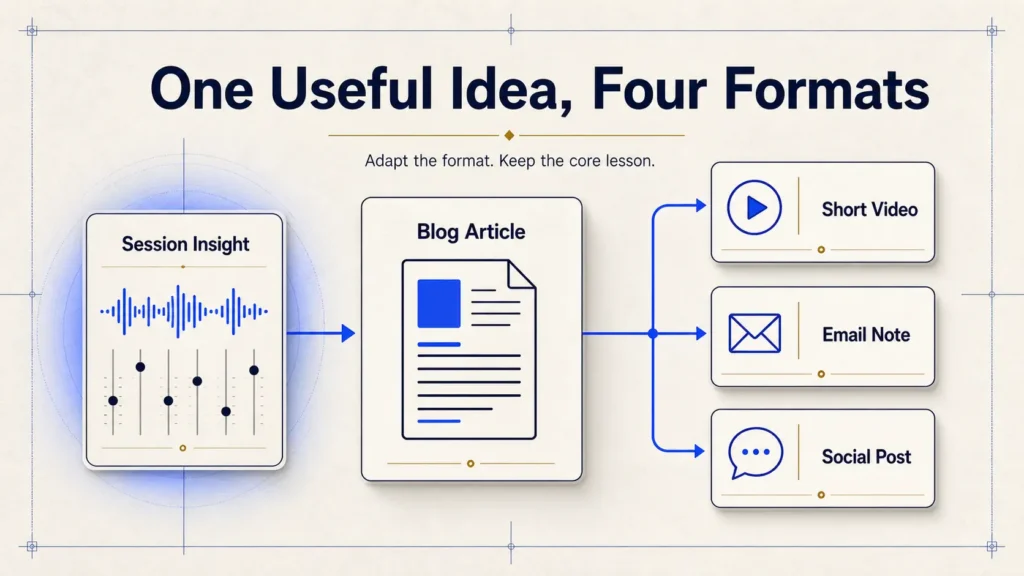
A blog does not have to create a separate workload from every other channel. One useful idea can become a connected set of assets.
A session breakdown might begin as an article with audio examples. You can then turn one lesson into a short video, share the main takeaway on social media, and send subscribers a concise version with a link to the complete explanation.
Repurposing works when each format suits its channel, not when the same block of text is pasted everywhere. A documented content marketing strategy can help connect the audience, goal, format, and distribution plan.
Google’s guidance for AI features in Search does not require a separate optimization method for AI Overviews or AI Mode. Clear, original, people-first material and normal SEO foundations remain the practical starting point.
When a Music Producer Should Not Start a Blog
Blogging has an opportunity cost. Time spent planning, writing, editing, and maintaining an article is time that cannot be spent finishing music, serving clients, or improving a weak portfolio.
Delay the blog if any of these conditions apply:
- Your best work, credits, services, and contact information are not easy to find.
- You cannot identify whether you are writing for artists, fans, production clients, or other producers.
- You have no useful next step for a reader after the article.
- Your audience responds better to demonstrations, livestreams, or short videos and you cannot support those formats with useful written context.
- You would publish generic advice that does not reflect your work or experience.
In those cases, improve the core website and the channel already producing meaningful conversations. A blog can be added after the foundation is working.
What Should a Music Producer Blog About?
Choose topics from the questions people ask before hiring, collaborating, licensing, or buying. The right subject depends on the audience and offer.
| Goal | Useful article direction | Natural next step |
|---|---|---|
| Win production clients | What to prepare before a remote production session | Production inquiry |
| Sell beat licenses | Exclusive and nonexclusive licensing explained in plain language | View available beats and terms |
| Sell sample packs | How a specific sound was designed and used in a track | Hear or preview the related pack |
| Build fan interest | The arrangement or story behind a release | Listen to the finished track |
| Demonstrate technical skill | A real mix or workflow decision, with permitted examples | Review credits or request a quote |
| Reach a regional audience | Recording or release considerations for a specific city, language, or scene | Join a relevant list or make contact |
Do not publish gear summaries or production advice that merely restates other sites. Google’s guidance on people-first content favors material made for an existing or intended audience and asks whether it demonstrates first-hand expertise.
A Minimum Viable Producer Content Hub
You do not need a large publication. A small producer site can work with a focused set of pages:
- A homepage that states who you help and what you produce.
- A selected-work page with playable examples and accurate credits.
- A services, licensing, or products page with clear terms.
- A contact page with the information needed to assess an inquiry.
- Privacy information for forms, analytics, and mailing-list activity.
- A resource section containing only articles that support the intended audience.
Build this structure before setting a demanding publishing schedule. If you need setup guidance, TechPrevue’s guide to starting a blog explains the broader process.
How to Measure Whether the Blog Is Working
Page views can show interest, but they do not prove that the blog supports your career. Select measures that match the reason you started publishing.
Track qualified inquiries if the goal is client work. For audience growth, measure valid email signups and unsubscribes, while product-focused producers should watch relevant licensing, beat, preset, or sample-pack clicks.
Search impressions, branded searches, return visits, and links to your resources can provide additional context. Review which topics attract the right people, improve useful pages, and stop producing formats that consume time without supporting a defined outcome.
Is a Blog Worth It for You?
Start a blog if you can identify the audience, the problem each article will solve, and the action a satisfied reader should take. It can become a durable part of your portfolio, search presence, email program, and content system.
If those three elements are missing, build the portfolio and distribution foundation first. A smaller, purposeful website is more useful than an inactive blog filled with generic posts.
